


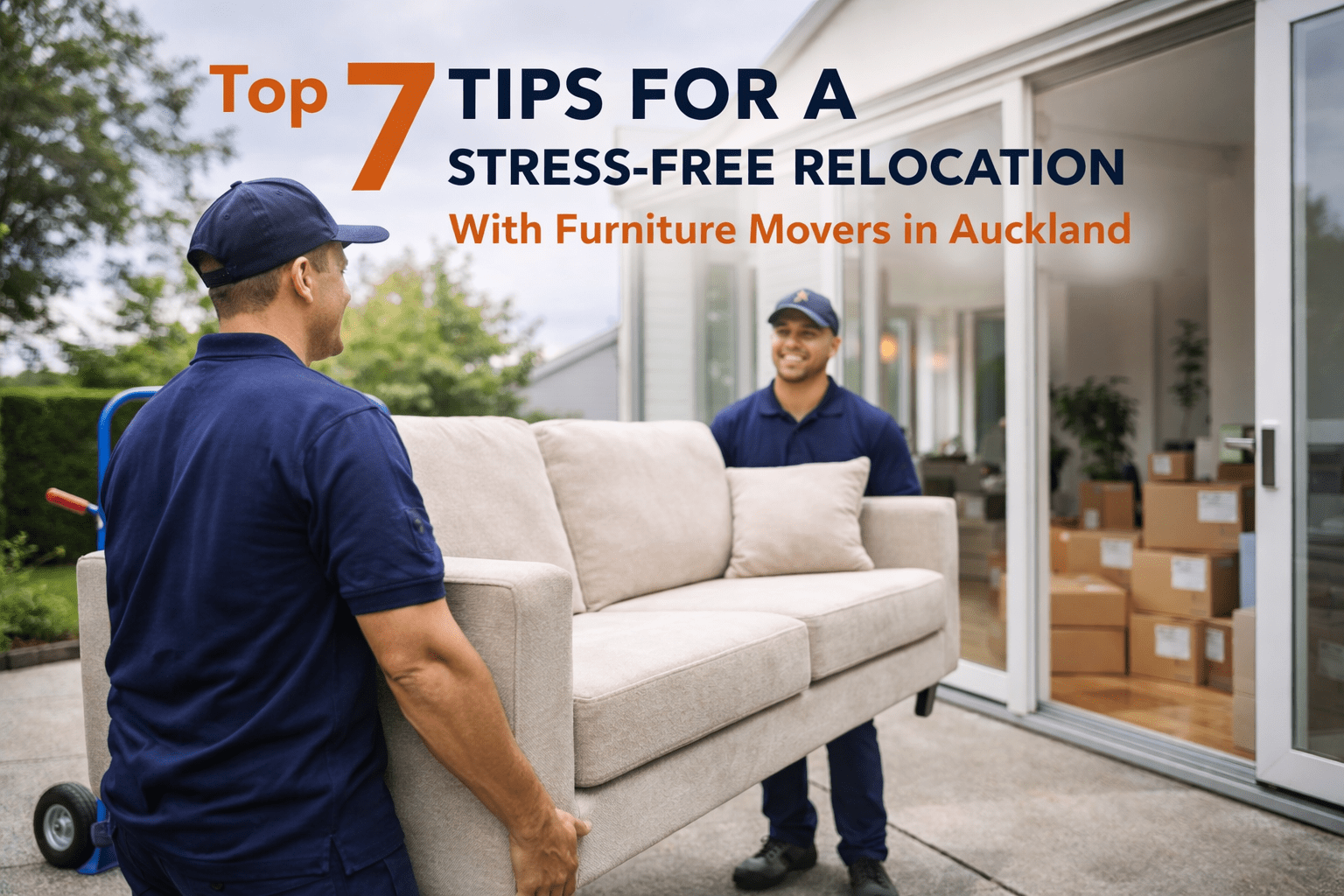
Moving to Auckland has a funny way of humbling people. You can be organised for weeks, but a narrow driveway, a grumpy lift reservation, or a sudden downpour can turn the day into a scramble. That is normal. Relocation is a minor logistics undertaking, and the uncertainty often causes more stress than the physical labour.
So let’s make it more predictable. These tips are practical, Auckland-friendly, and built around what usually goes wrong rather than what looks appealing on a checklist.
There is a reason researchers talk about “cognitive load” during life admin. When too many decisions land at once, even simple tasks feel harder than they should. A move is essentially decision-making under time pressure, so your goal is to reduce the number of decisions on moving day. The appeal of furniture movers in Auckland lies in their ability to simplify logistics while offering peace of mind throughout the moving process.
You are not aiming for perfection. You are trying to stop small choices from piling up, which is where stress usually starts to creep in.
People sometimes assume moving quotes are all the same. They are not. In consumer law terms, pricing can become messy when a quote is vague, the scope changes midstream, or the customer and provider interpret “included” differently.
The Commerce Commission is blunt about one thing: businesses must not mislead customers when giving quotes and estimates. That cuts both ways. You also want to ask the questions that force clarity.
It can feel picky, but it is really just risk management. And it sets you up for Tip 3.
Auckland moves often fail in the driveway, not in the living room. Inner suburbs and busy streets can mean limited parks, towing zones, and neighbours who understandably do not love a truck blocking the lane.
If you are in a permit-heavy area, Auckland Transport has specific parking permits and coupons that may help residents in busy central suburbs park near their homes. And when traffic and parking controls are involved, AT also notes that formal controls sit within a legislative framework.
Many apartment buildings have rules around service lift usage and restricted delivery times, so planning ahead can prevent delays.
Packing advice often focuses on “labelling your boxes”, which is fine, but it misses the main point. Good packing reduces handling risk. Poor packing creates awkward loads, and awkward loads are where injuries and breakages happen.
Furniture movers treat lifting, carrying, pushing, and pulling as hazardous manual tasks when loads are heavy, awkward, or handled in poor posture.
Your movers will move faster, and you will spend less time searching for essentials later, which ties back to how you protect people and furniture.
A lot of moving-day damage happens because the path is cluttered. It forces twisting, reaching, and sudden pivots, which WorkSafe flags as common contributors to manual handling risk.
You do not need to run a full assessment at home, but the principle still holds. Reduce awkward handling, and the whole move becomes calmer.
Auckland traffic is not theoretical. Timing matters, and so does how the load is secured. If you are towing a trailer or doing a self-move for part of it, safe loading and towing guidance is worth a skim. It even gives brake-distance context and weight recommendations for unbraked trailers.
Good load restraint is not just about protecting your stuff. It is also about road safety.
Many people skip this step thinking nothing will go wrong, but it s important to be realistic. By default, moves are carried out on an Owner s Risk Only basis. Customers can choose to arrange additional insurance for peace of mind, which must be organized and paid in advance.
If you want insurance coverage, you must request it from the mover. The cost is at your expense, and the payment must be made upfront directly to the insurance company before moving day. Any mover offering coverage as part of their service should provide it in writing, and you should confirm the details with the insurer before the move.
This way, customers have peace of mind knowing what is covered and what is not.
The best relocations are not perfect. They are predictable. Clear quotes reduce uncertainty. Access planning avoids bottlenecks. Smart packing lowers handling risk. And a simple insurance decision stops the what-ifs from hovering in the background.
If you want the process to feel steadier, start with these seven steps, then line up experienced furniture movers Auckland residents trust for a smooth finish. Are you prepared to confirm your move date? Reach out, get a clear plan, and let the moving day feel surprisingly straightforward.
© 2026 LJ Furniture Movers All Rights Reserved l Privacy Policy | Terms & Conditions | Website Design by Smegoweb nz